
FeNO
Fractional Exhaled Nitric Oxide Testing
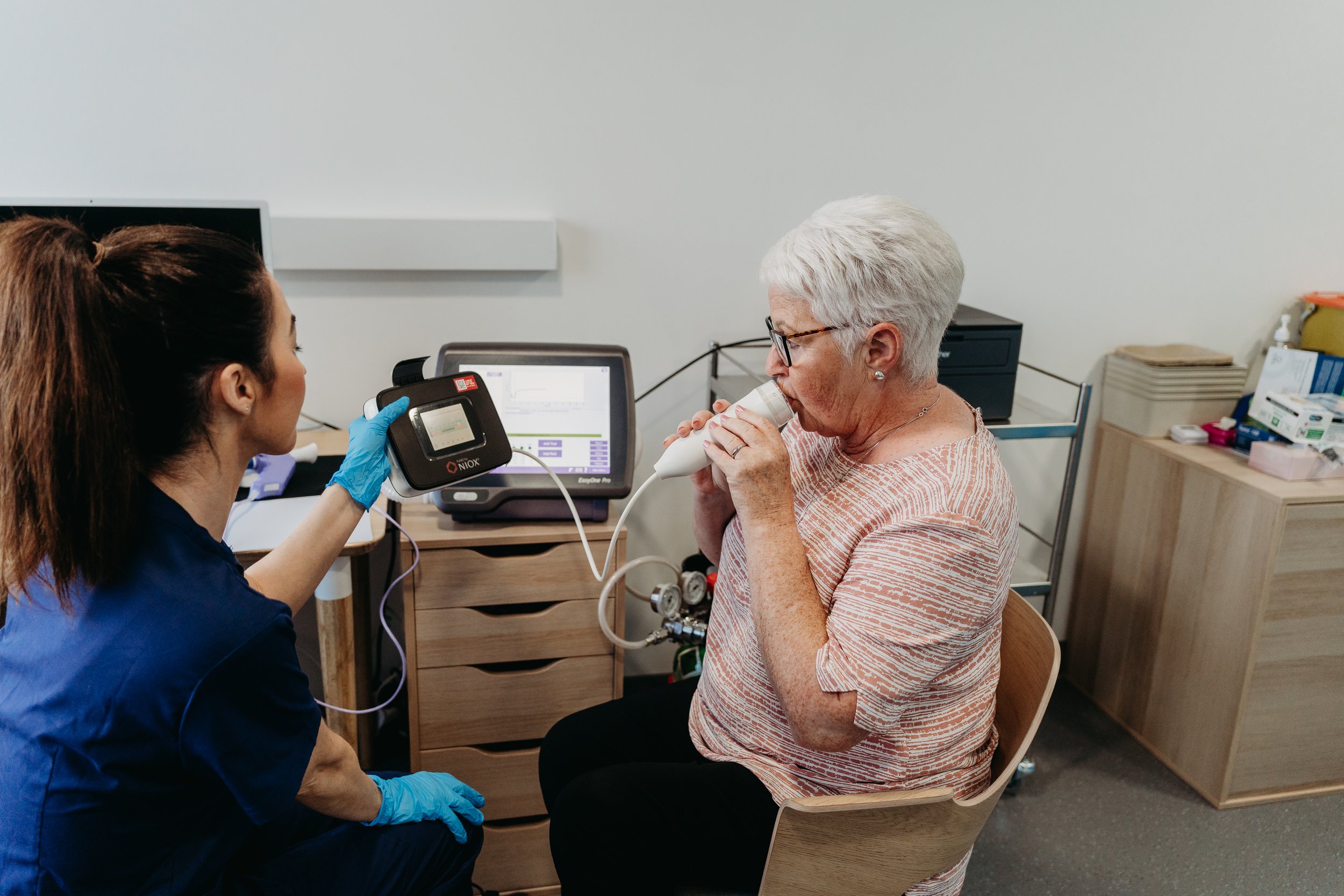
FeNO, or fractional exhaled nitric oxide testing, is a simple and non-invasive way to check for airway inflammation associated with Asthma.
It measures the amount of nitric oxide in exhaled breath, which indicates inflammation. This test helps doctors create personalised treatment plans, track disease progress, and evaluate the success of anti-inflammatory treatments. Its a straightforward process and fast results make it an important tool in asthma diagnosis and management.
FeNO can be performed on its own or in conjunction with Spirometry with reversibility to confirm a diagnosis of asthma.
Learn more about asthma here
FeNO Demonstration Video
*NB: This Video if for Demonstration purposes only.
Frequently Asked Questions.
-
Yes, FeNO testing is suitable for patients age 5 and above. As measurement requires patient cooperation, some children below the age of 7 may require additional coaching and encouragement and in some cases it may not be possible to obtain a result.
-
Avoid smoking before the FeNO test, as it can impact the results. Also, refrain from eating nitrate-rich foods like green leafy vegetables and beetroot, as well as caffeine on the day of the test.
Pre test instructions will be sent to you prior to your test as a reminder of how to prepare.
-
There are no contraindications to FeNO testing. It is a completely safe test that takes minutes to perform.
-
FeNO test results indicate the level of inflammation in your airways. Higher levels of nitric oxide suggest increased inflammation, which may indicate poorly controlled asthma or other respiratory conditions. Your healthcare provider will explain what your specific results mean and how they impact your treatment plan.
-
Results are often available immediately after the test. Your healthcare provider will review the results with you and discuss any necessary follow-up or treatment plans.
-
The test itself typically takes about 5-10 minutes. However, you may need to spend additional time at the clinic for preparation and post-test discussions with your healthcare provider.