
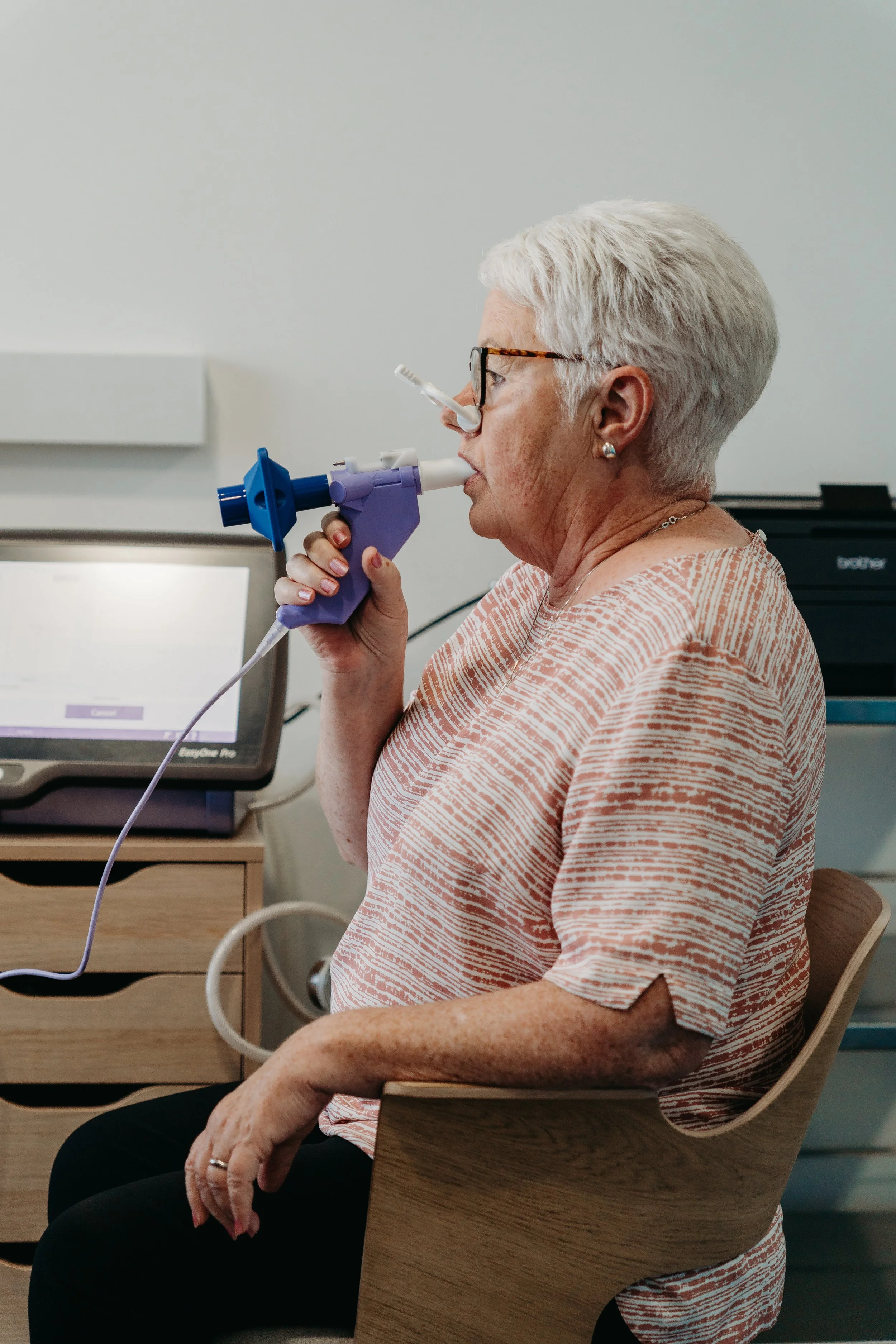
Spirometry
Spirometry is a vital diagnostic tool used to assess lung function by measuring the volume and flow of air that can be inhaled and exhaled. During the test, you will breathe into a device called a spirometer, which records various parameters, including the Forced Expiratory Volume in one second (FEV1) and the Forced Vital Capacity (FVC).
This information is essential for the diagnosis and management of respiratory conditions such as asthma, chronic obstructive pulmonary disease (COPD), and other pulmonary disorders.
Accurate spirometric measurements allow healthcare providers to evaluate the extent of lung impairment, monitor disease progression, and tailor treatment plans effectively.
Regular spirometry testing is crucial for individuals at risk of lung disease, ensuring timely intervention and improved patient outcomes.
Spirometry Test Demonstration
On this demonstration video, we show the vital capacity manoeuvre.
*NB: This Video is for Demonstration Purposes only.
Frequently Asked Questions.
-
Your doctor may recommend a spirometry test if you have symptoms of a lung condition, such as shortness of breath, wheezing, or a persistent cough. It helps in diagnosing conditions like asthma and COPD, and in monitoring the effectiveness of treatment.
-
You will receive information on how to prepare for your test when you receive booking confirmation.
Avoid smoking for at least an hour before the test.
Do not consume alcohol for at least four hours before the test.
Avoid heavy meals before the test.
Wear loose, comfortable clothing.
Follow any specific instructions given in your booking confirmation
-
The test itself usually takes about 15-30 minutes. However, you may need to spend additional time at the clinic for preparation and post-test discussions with your healthcare provider.
-
You should inform your healthcare provider about all medications you are taking. They will advise you on whether to continue or temporarily stop any medications before the test.
-
Spirometry results include measurements such as Forced Vital Capacity (FVC) and Forced Expiratory Volume in 1 second. Your doctor can explain what your results mean at your follow up consultation.
-
There are a few contraindications to spirometry testing.
The main risks involve high pressure in the chest affecting organs, blood flow, and lung expansion. These risks are usually low but should be considered alongside the clinical benefits of the test.
Contraindications will be checked twice prior to teasting. The first will be via questionnaire at booking and again on the day of the test. It is important to contact us if you develop any contraindications before your appointment.